By Susanna P. Barton, MS Gero
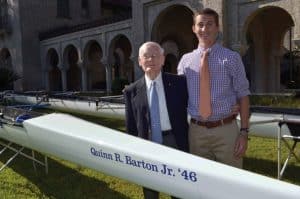
Our Papa, my husband’s father Quinn R. Barton Jr., member of the Bolles Class of 1946, Princeton grad, expert reciter of Shakespeare and namer of family vehicles, passed away this Father’s Day, June 21 at the age of 98. As an homage to this deeply thoughtful gentleman of all gentlemen and a shout out to the increasing number of Super Agers and Centenarians like him out there, I’d like to share a few words about how, from a gerontological standpoint, Papa is a “mighty” fine example of successful aging and articulate a few reasons why, and what we can learn from him.
Like most of us, Papa did not plan for aging with any enthusiasm or precision — or even any acceptance that it was actually something that might happen to him. Aging and death were non-existent in his life perspective. He was forever young! He may not have been aging or “old, like those old people over there,” but he was seeing the very best in everyone and everything — which, ironically, was a strength of being old and aging well.
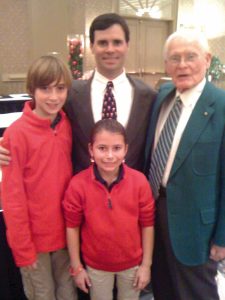
Barton, Marley Barton,
Quinn Barton Jr.
Many qualities that came naturally to Papa are now linked to healthier, happier aging. He was relentlessly positive, rooted in his Catholic faith, surrounded by family, committed to his community and generous with his time. He found comfort in familiar places and routines, slept well, ate carefully, rarely drank and took daily walks. He remained curious, reciting Shakespeare, solving Jumbles, watching classic movies and reading great books. He also maintained a gentle sense of humor, memorialized in such family-car names as Brigadoon, Eucalyptus Windermere and The Phantom.
Gerontological research connects these habits with longevity, resilience and well-being. Optimism helps people recover from stress and remain engaged. Faith offers meaning, hope and community. Close relationships are among the strongest predictors of health and happiness, while purpose and intergenerational connections support cognitive and emotional health. Sleep, movement and nutritious food strengthen the body; reading, puzzles and conversation build cognitive reserve. Humor lowers stress and strengthens social bonds.
No single quality explains a life that stretched nearly a century. Together, however, Papa’s habits created a life rooted in purpose, connection, curiosity, gratitude and delight. He never studied the science of successful aging. He lived it.
That’s a legacy worth carrying forward. The science shows it. Thank you, Papa, for being an example of this for all of us! Cheers to 98 years of successful aging and living!